In the dynamic landscape of manufacturing, the advent of 3D printing has sparked a revolution, transcending traditional limitations and opening doors to unparalleled possibilities. From prototyping to production, the versatility of 3D printing technology has reshaped the way industries conceptualize, design, and fabricate. Let’s delve into the multifaceted applications of 3D printing in manufacturing, illuminating its transformative impact across various sectors.
Rapid Prototyping: Sculpting Ideas into Reality
Traditionally, the prototyping phase in manufacturing was a laborious process, involving extensive time and resources. However, with 3D printing, this paradigm has undergone a seismic shift. Manufacturers can now swiftly translate conceptual designs into tangible prototypes with remarkable precision and efficiency. This expedites the iteration cycle, fostering innovation and enabling rapid refinement of product concepts.
Customization: Tailoring Solutions to Perfection
One of the most compelling advantages of 3D printing lies in its ability to facilitate customization on a mass scale. Whether it’s personalized medical implants, bespoke automotive components, or tailored consumer goods, 3D printing empowers manufacturers to cater to individual needs with unparalleled flexibility. This level of customization not only enhances user experience but also drives customer satisfaction and brand loyalty.
Complex Geometries: Pushing the Boundaries of Design
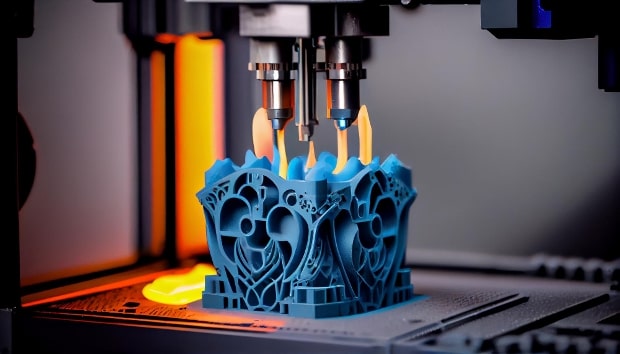
Traditional manufacturing techniques often encounter limitations when dealing with intricate geometries and complex structures. 3D printing transcends these constraints, enabling the fabrication of geometrically intricate components with unparalleled intricacy and precision. From lightweight aerospace components to intricately designed architectural elements, the freedom afforded by 3D printing fuels innovation and pushes the boundaries of design possibilities.
Supply Chain Optimization: Streamlining Production Processes
The decentralized nature of 3D printing facilitates on-demand production, significantly reducing lead times and minimizing inventory overhead. By leveraging additive manufacturing technology, manufacturers can adopt a just-in-time approach, producing components as needed and eliminating the need for costly warehousing. This lean manufacturing model not only enhances operational efficiency but also mitigates supply chain risks and enhances responsiveness to market demands.
Material Innovation: Exploring New Frontiers
With advancements in material science, the repertoire of materials compatible with 3D printing continues to expand, unlocking new avenues for innovation. From biocompatible polymers for medical applications to high-performance alloys for aerospace engineering, the versatility of 3D printing materials catalyzes the development of cutting-edge solutions across diverse industries. Moreover, the ability to blend multiple materials within a single print further enhances design flexibility and functional performance.
Sustainability: Pioneering Eco-Friendly Practices
In an era marked by environmental consciousness, 3D printing emerges as a sustainable alternative to conventional manufacturing practices. By minimizing material wastage and energy consumption, additive manufacturing contributes to a greener, more eco-friendly production ecosystem. Additionally, localized production capabilities reduce the carbon footprint associated with transportation, further bolstering sustainability initiatives and fostering a circular economy ethos.
Conclusion: Shaping the Future of Manufacturing
As we navigate the evolving landscape of manufacturing, the transformative potential of 3D printing continues to redefine industry standards and catalyze innovation. From rapid prototyping to sustainable production practices, the myriad applications of additive manufacturing underscore its status as a disruptive force reshaping the fabric of modern manufacturing. As we embrace the limitless possibilities afforded by this groundbreaking technology, we embark on a journey towards a future where imagination knows no bounds.